A Family Outing, Part I: Madrid

Looking over the general pattern of my ‘adult life’, I can divide my years between adventures far from home and periods spent among family and friends in the Bay Area. Things seem to move in a fairly predictable rotation between the two. Recently, I had a most wonderful opportunity to combine the best of both worlds thanks to a fabulously generous offer to accompany my father and step-mother on a visit to Europe. With the core motivation of visiting my sister Zeneva during her time studying in Oxford (sound familiar?), a lovely itinerary came together involving visits to Spain, the UK, and in my case a little detour down into Morocco.

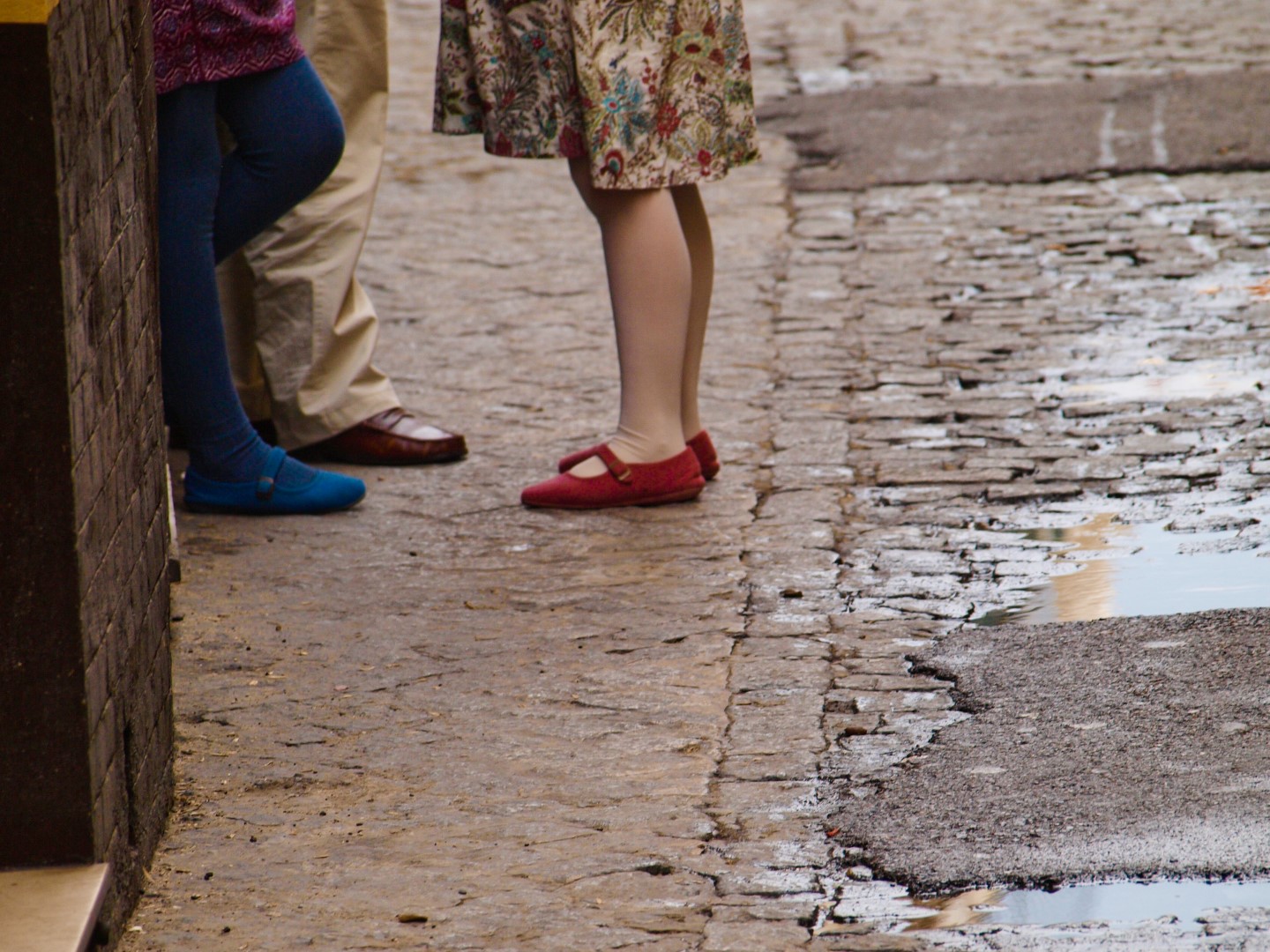
Taking off a few days early, I headed from San Francisco to Madrid to meet my Sis for a few days of play before making our way south to grab the parents in Malaga. If we had attempted our arrival a day earlier we would have been frustrated by the general strike that rocked Spain’s major cities, including Madrid and Barcelona. Instead we found our way to the capital without issue and enjoyed a couple wonderful days wandering around the city. As luck would have it, my time in Madrid coincided perfectly with a visit from my old friend Ben Golder, now studying ecological architecture on a Fulbright in Barcelona. Having his eye for expression of creativity and intelligence in the built environment just added to my own enjoyment of the metropolis. Plus it was just damned nice to see the dude (once upon a time Ben was a frequent house-guest in Dustin’s and my apartment in Granada).

*

*

*

*

*

*

*

*

Read full storyComments { 1 }

A Return to the Alhambra

I seem to keep coming back…

*

*

*

*

*

*

*

*

Read full storyComments { 1 }

A New Year Entirely

Holy smokes. I look away for what feels like five minutes and a year slips by without an update. Such has always been the dilemma, in my experience, of being home. Home I italicize because it is a slippery concept in my mind and heart and one that calls for constant examination and debate. But that is for another post. The point is that yesterday, after many moons of pleasant living in my ancestral home of sometimes-sunny Santa Cruz, California, I turned a lazy eye to this site and found it in total disarray. If it was a house, I would have found shattered windows, shoulder-high weeds choking out the yard, tagged up walls, and an infestation of filthy and dangerous looking freeloaders. Since it is in fact a website, it greeted me instead with flashing google attack page warnings (you’ve been hacked), broken permalink structures, failing plugins, and so on. So I got to spend some hours figuring out to ‘unhack’ a website and return it to a decent state of repair.

As I do so, part of me can’t help but ask ‘why bother?’. A critical voice reminds me that living in Santa Cruz, while joyful and rich in many facets of experience (family, friendships, natural beauty), always brings my creative output to a thudding halt. While wandering in unknown places I find that I always want my camera in my hand, that notes and poems and anecdotes are far more likely to find their way from my brain to a page, and that my little old website gets plenty of attention, back home everything gets too damn comfortable too damn quickly, and somehow comfort ends up being synonymous with stagnation. Creatively speaking, that is.

Buts its a new year. 2012! And after well over a year back in the heartland, I find myself likely to be here another year yet. So should I just accept that I am not capable in this environment of being creative and expressive in the ways that fuel something like this blog? I’d really rather not. I’d really rather use this space and any other tools available to inspire/motivate/push myself into practicing more acts of creative expression. So, having hacked down the weeds, repainted the walls, put in new windows, and convinced the squatters (hackers) to move along, I intend to break that old narrative and find a way(s) to utilize this space even though i’m not riding a camel around the pyramids or meditating in a jungle or whatever other nonsense young adventurous westerners manage to get up to.

Ta da. That’s all for the moment. An intention statements of sorts. If there is anyone out there reading, you are welcome to help hold me to it.

For good measure, since we’re already here..how about a few photos from the last however long. Here’s what was sitting gumming up the memory card in my camera. Sunsets and cats. I guess I could be doing worse.

*

*

*

*

*

Read full storyComments { 0 }

For Love of the City

I always feel a peculiar polarity between wanting to live in a beautiful, pristine rural setting or in a bustling, hustling metropolis. Setting up shop in an old farmhouse somewhere and doing some serious homesteading sounds fantastic. Chickens, bees, gardens, canning and tree planting and building things with old tools hanging in an old tool shed. At the same time, I seem to be most comfortable in the city. I love the anonymity of walking amongst crowds of people unnoticed. One of my favorite experiences used to be sitting on the tube in London with my eyes closed and trying to count how many languages I could hear bouncing around the car. It always took at least two hands to count. While the rise of the city is the focal point of some of our major global developmental challenges (and thus, the point of emergence for ingenious solutions and adaptations), I have always loved the chaos that is given form by all that color, noise, diversity. I guess this polarity is the source of my growing passion for urban changemaking, be it urban and peri-urban agriculture, adaptive and green design, urban homesteading, or what have you.

Anyway. I am settling for a time in Santa Cruz, which is a lovely place that represents neither end of the spectrum. And I started prattling about cities because I have been getting a nice ‘fix’ by taking frequent trips to San Francisco, a city that I love. This last weekend we found excuse for the drive in the Chinese New Year Parade, reportedly one of the world’s 10 greatest parade events. Unfortunately, the parade itself seemed a rather ghastly illustration of how capitalism can mutilate cultural expression: nearly every float was a giant advertisement for Visa, Wells Fargo, or McDonald’s. The parade itself is now titled the ‘Southwest Airlines Chinese New Years Parade’. Which certainly turns my stomach. Not to mention nearly the whole route was obscured by formidable bleachers which were paid-entry only. So much for an open community event. Ah well. The marching bands were still amazing…And we managed to have a pretty epic time no matter, splashing around in the rain, squaring off against some pretty intense Cashew Chicken, and following the evening south into the Mission for tea, jazz and visits with old friends. Here are a couple photos from that little excursion and other recent forays to the city.

*

*

*

*

*

*

*

*

*

Read full storyComments { 0 }

Designing for Disaster: Evaluating the Potential for Application of Permaculture Design in Development and Emergency Contexts

This site has received less attention than I would like over the last year and a half, due in large part to the lion’s share of my energy and focus being centered on my studies in England. As such, I am glad to make use of this page now to announce that I have completed my dissertation, and with it my masters degree in Development and Emergency Practice. The process which culminated in the completion of this last project  has been an incredible one. I shipped off to the UK to begin the course with little knowledge of what I was entering into, and found myself consistently amazed and inspired by the quality of the learning that was on offer, and most particularly by the exceptional individuals who provided it. I would be hard pressed to find words to recommend the program highly enough. Along those lines, I would like to express gratitude here for the guidance provided by Mohamed Hamza and David Sanderson, and for the invaluable support from Kevin Dunbar, Anita Cuddihy, Angelo Pancini, Elisa Pederson, Alec Stouras, the Schindlers, and Tom and Susie Johnson.

For any who are interested, a copy of my dissertation is available below, along with an abstract which gives an idea of its contents.

Click Here to Download

Abstract

Permaculture is a practical design system that mimics the functions and patterns of ecosystems in planning for sustainable human settlements, incorporating integrated systems for food production, shelter, energy capture and use, and a range of other material and non-material needs. The purpose of this dissertation is to evaluate the permaculture system in terms of its potential for application in development and emergency contexts.

As a point of departure for this study, it is proposed that the interrelation between global poverty and severe environmental degradation produces an unprecedented need for holistic approaches to development, capable of integrating poverty alleviation measures with sustainable ecological management practices. Permaculture is positioned as the focal point of research because its principles and methods seem impeccably suited to meet this need, and yet are lacking a substantial body of literature to recommend them.

The research approach utilized included an extensive effort to locate and compile what documented evidence does exist of permaculture in development and humanitarian situations, and to combine it with correspondence and key informant interviews to form as complete a picture as possible of the system’s capacities in these fields. Four case studies were selected for closest inspection, based on criteria including quantity of available information and ability to demonstrate a range of activities and outcomes.

Analysis of case studies, background information on permaculture design, and a range of developmental challenges towards which permaculture can be applied yielded clear insight into considerable potential for permaculture initiatives to achieve positive impacts in a variety of development and emergency contexts. Areas of substantial applicability include deployment of low-cost and adaptable methods for managing waste and accessing safe water in post-disaster environments, innovative design methods for refugee camp design and management, reduction of greenhouse gas emissions through sequestration of carbon, and most importantly, mobilization of integrated and adaptable systems for increasing livelihoods and community security while simultaneously rehabilitating ecosystems promoting sound environmental management practices.

Read full storyComments { 0 }